
Islamabad Accord – Peace of the Century is going to be the major turning point of the 21st century.
As the sun sets over the Margalla Hills this Friday evening, the world’s eyes are not on Washington, Geneva, or London. They are fixed on the “Red Zone” of Islamabad. Tomorrow, Saturday, April 11, the Serena Hotel will transform from a luxury landmark into the most high-stakes diplomatic theater of the decade.
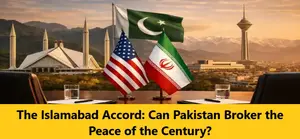
The Islamabad Accord: Can Pakistan Broker the Peace of the Century?
The Islamabad Accord isn’t just another ceasefire; it is a desperate, two-phased attempt to pull the planet back from the brink of a wider global conflict. With US Vice President JD Vance and Iranian Parliament Speaker Mohammad Bagher Ghalibaf set to begin “proximity talks,” we are witnessing a historic pivot in global power dynamics.
The Architect: Why Islamabad?
For decades, Middle Eastern peace was brokered in Western capitals. But the 2026 Iran-US war has rewritten the rules. Pakistan has emerged as the only credible “bridge” capable of housing these negotiations.
The brokering of this deal was not a result of standard bureaucracy. It was the product of intense, 72-hour shuttle diplomacy led by Prime Minister Shehbaz Sharif and Field Marshal Asim Munir.
By maintaining a Major Non-NATO Ally status with the US while sharing a sensitive 900km border with Iran, Pakistan has navigated a geopolitical tightrope to bring both sides to the table.
The Two-Phase Framework: A Roadmap to Stability
The Islamabad Accord is structured as a 45-day transition intended to move from “silencing the guns” to “signing the peace.”
Phase 1: The Fragile Pause (The Next 14 Days)
The current two-week ceasefire, which began on April 8, rests on one non-negotiable pillar: The Strait of Hormuz. * The Mandate: Iran must immediately reopen the Strait, restoring the flow of nearly 20% of the world’s oil.
- The “Nuclear Dust” Clause: In a striking statement, President Trump has demanded that the US and Iran work together to “dig up and remove” what he termed “nuclear dust” from deeply buried Iranian sites.
Phase 2: The Permanent Settlement (The 45-Day Window)
If Phase 1 holds, the dialogue shifts to a broader 45-day negotiation period. The stakes here are generational:
- Sanctions & Assets: The unfreezing of billions in Iranian assets in exchange for verifiable nuclear and missile constraints.
- The “Axis” Question: The US is pushing for a cessation of Iranian support for regional groups, while Iran is demanding an end to all US-Israeli operations in Lebanon and Iraq.
The High-Stakes Players – Islamabad Accord – Peace of the Century
The seniority of the delegations arriving in Islamabad signals that this is not a performative summit, it is a “make or break” moment.
| Delegate | Role | Strategic Intent |
| JD Vance (USA) | Vice President | To secure a “peace through strength” victory that stabilizes global oil prices. |
| M. Bagher Ghalibaf (Iran) | Parliament Speaker | To secure sanctions relief while maintaining Iran’s regional sovereignty. |
| Abbas Araghchi (Iran) | Foreign Minister | A veteran negotiator tasked with the technical specifics of the nuclear file. |
| Steve Witkoff (USA) | Special Envoy | Ensuring the economic and maritime security details align with US interests. |
The “Red Line” Challenges
Despite the optimism in Islamabad today, the path forward is fraught with “red lines.” On Thursday, Foreign Minister Abbas Araghchi posted a stark warning: “The U.S. must choose—ceasefire or continued war via Israel. It cannot have both.”
Read More: https://munafamarketing.com/real-future-of-military-surveillance-2026-and-beyond/
Meanwhile, the US side remains firm: Zero enrichment. The removal of nuclear materials is a “hard floor” for the Trump administration. The challenge for Pakistani mediators will be finding a semantic and strategic middle ground between “sovereignty” and “security.”
A Post-Western Diplomatic Order?
Perhaps the most lasting legacy of the Islamabad Accord, regardless of the outcome, is the shift in the “center” of the diplomatic world. The involvement of Beijing in the background and the leadership of Islamabad in the foreground suggest that the era of Western-only mediation is over.
As the delegations prepare for the first round of talks tomorrow morning, the world waits. For the citizens of Pakistan, there is a sense of pride in hosting the “Summit for Peace.” For the rest of the world, there is the simple hope that the “Islamabad Accord” becomes more than just a document—that it becomes a definitive end to the fires of war.
Key Takeaway for the Weekend: Islamabad Accord – Peace of the Century
The ceasefire is a temporary window. The real work begins at 9:00 AM PKT on Saturday. If the Strait remains open and the rhetoric remains controlled, the Islamabad Accord could very well be the defining diplomatic achievement of the 21st century.
Disclaimer/Note: The information above might not be 100% correct. Please verify from your own sources. We will not be responsible for any kind of loss or liability due to our content.
For more news, please visit Munafa Marketing.